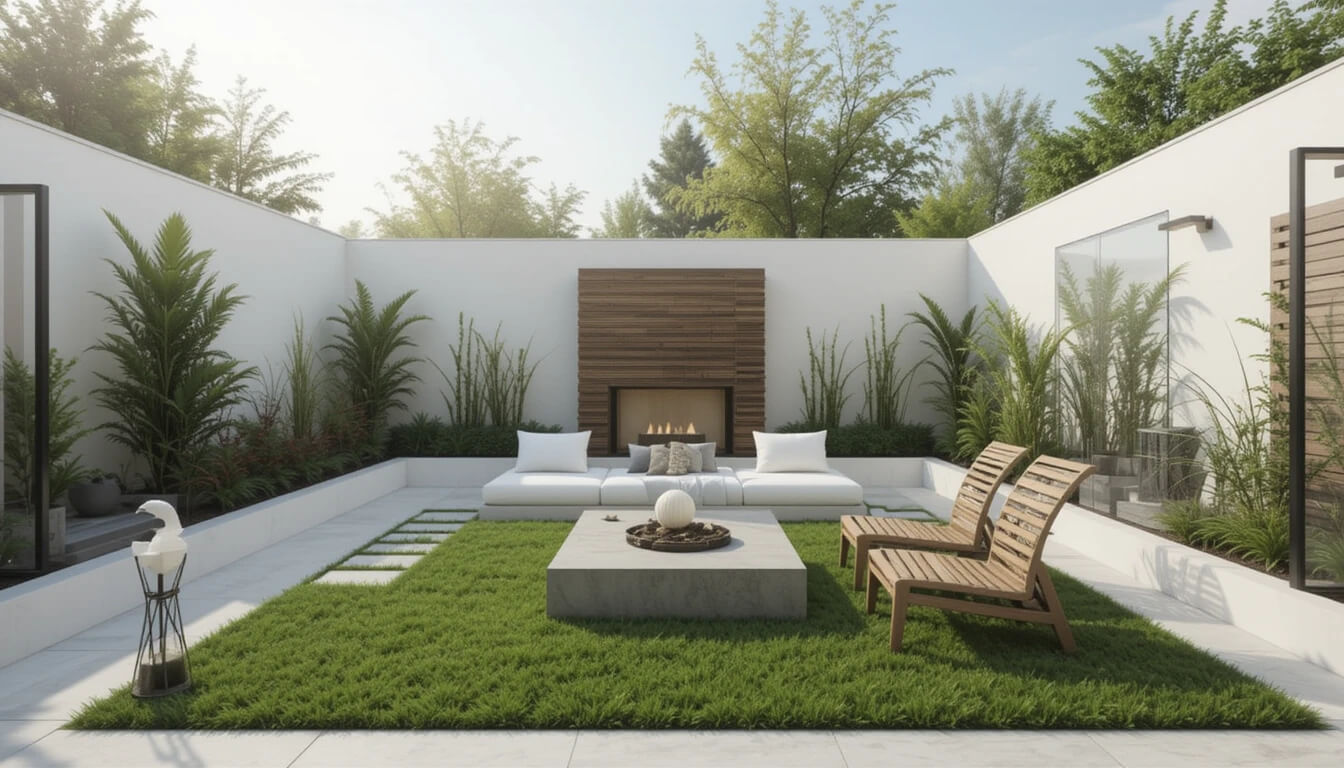
Modern garden design is all about clean lines, simplicity, and a thoughtful blend of natural and architectural elements.
Whether you have a sprawling backyard or a small urban garden, these ideas can transform your garden into a serene and contemporary retreat.
Here are 12 modern garden design ideas that combine functionality and aesthetics.
1. Curved Stone Garden Paths
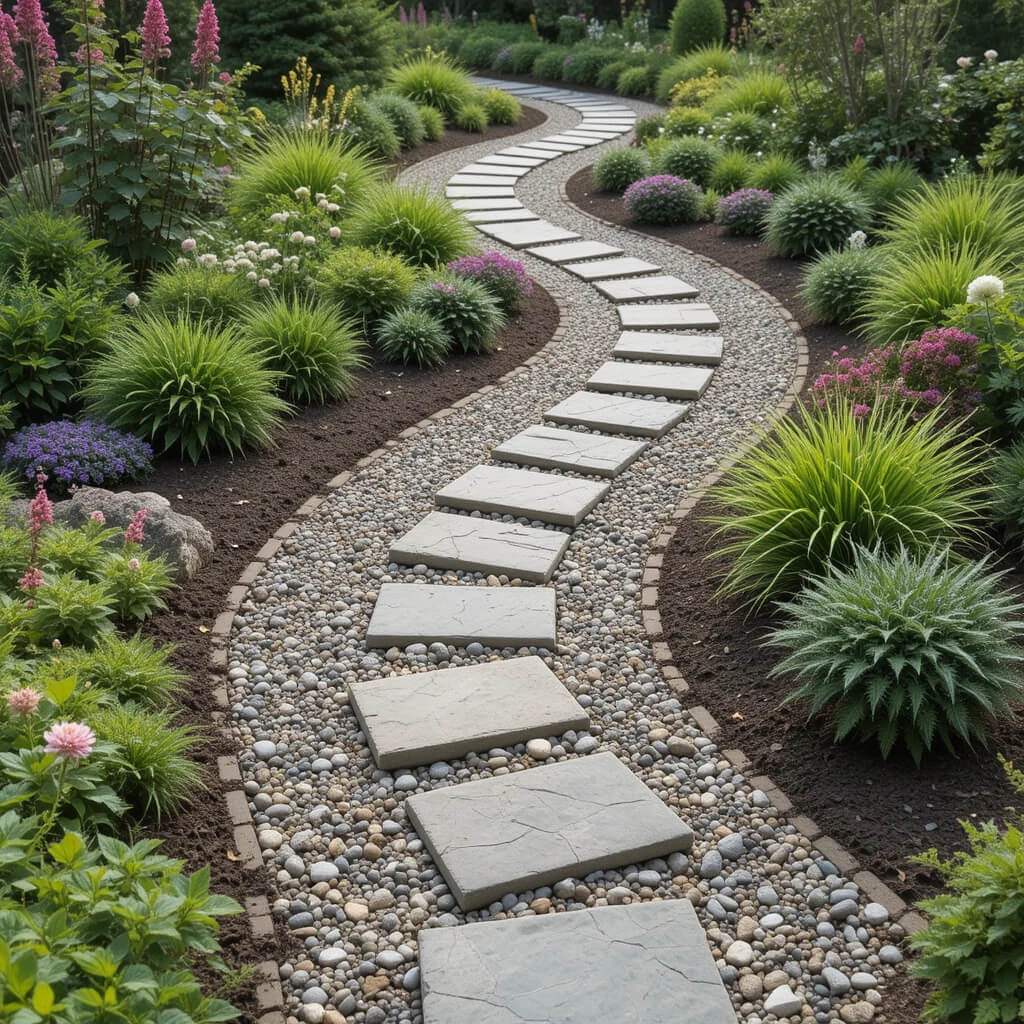
Create a winding stone path to add dimension and structure to your garden.
Curved paths feel more natural than straight lines and guide visitors through different garden zones. Use materials like gravel, stepping stones, or flagstones.
A stone path not only enhances visual interest but also protects delicate plants by directing foot traffic, creating separation between walking areas and planting beds.
2. Raised Garden Beds for Better Plant Health
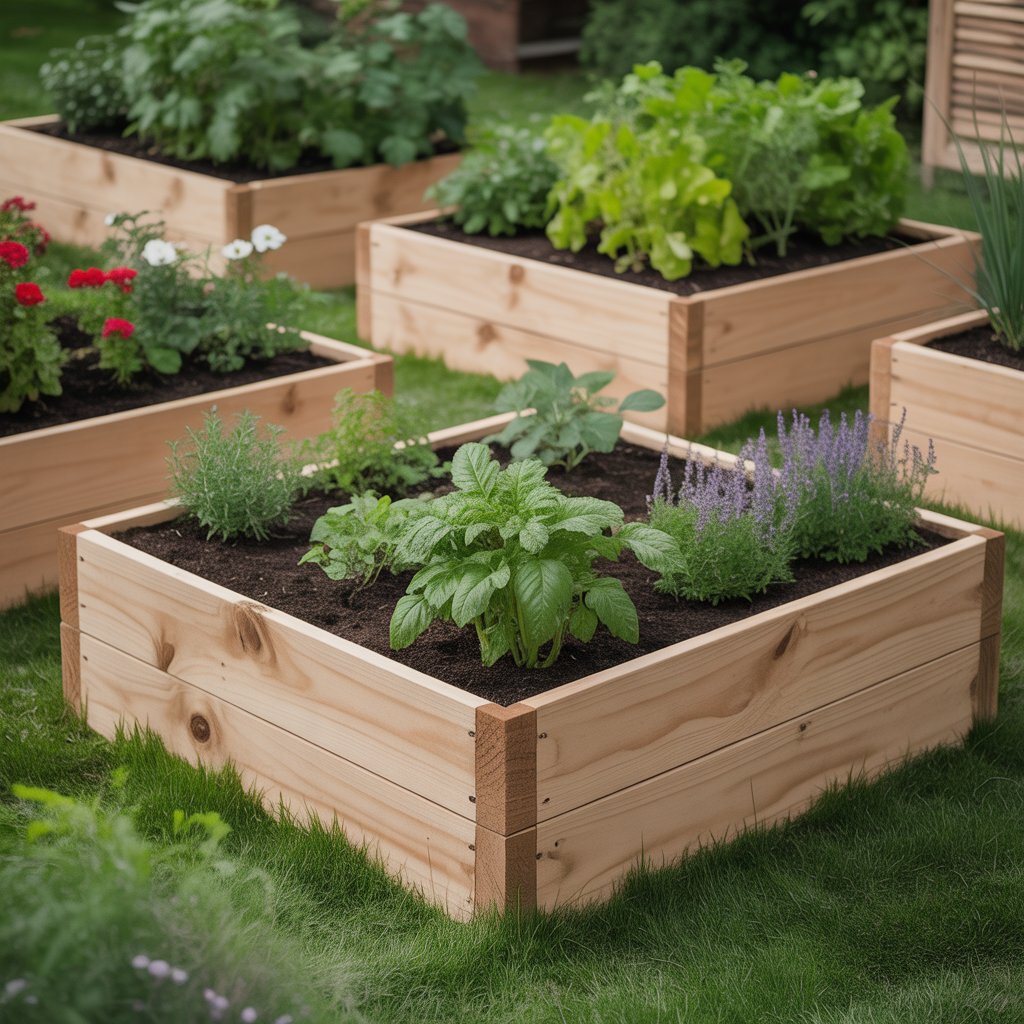
Raised beds give a clean, organized look and improve soil drainage and root aeration.
Elevated planting areas enhance soil quality, making plants healthier and stronger.
This design is ideal for herbs, vegetables, or flowering plants and is ergonomic, reducing strain on gardeners by lessening the need to bend over.
3. Landscape Layering for Depth and Harmony
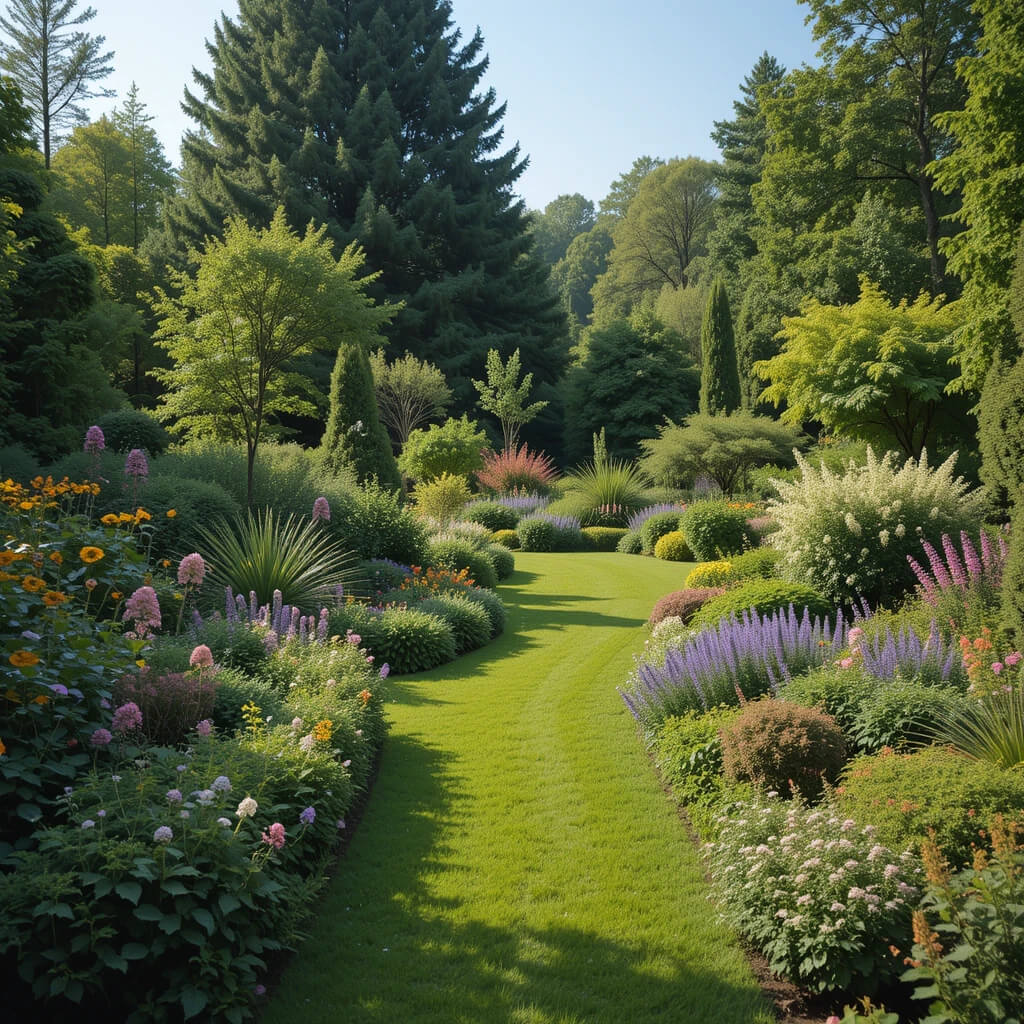
Layer your garden by dividing it into three zones: foreground (low-growing plants and ground covers), midground (medium shrubs and perennials), and background (tall trees and larger shrubs).
This technique adds depth, visual interest, and a balanced flow, creating a harmonious and inviting outdoor space.
4. Decorative Gabion Features
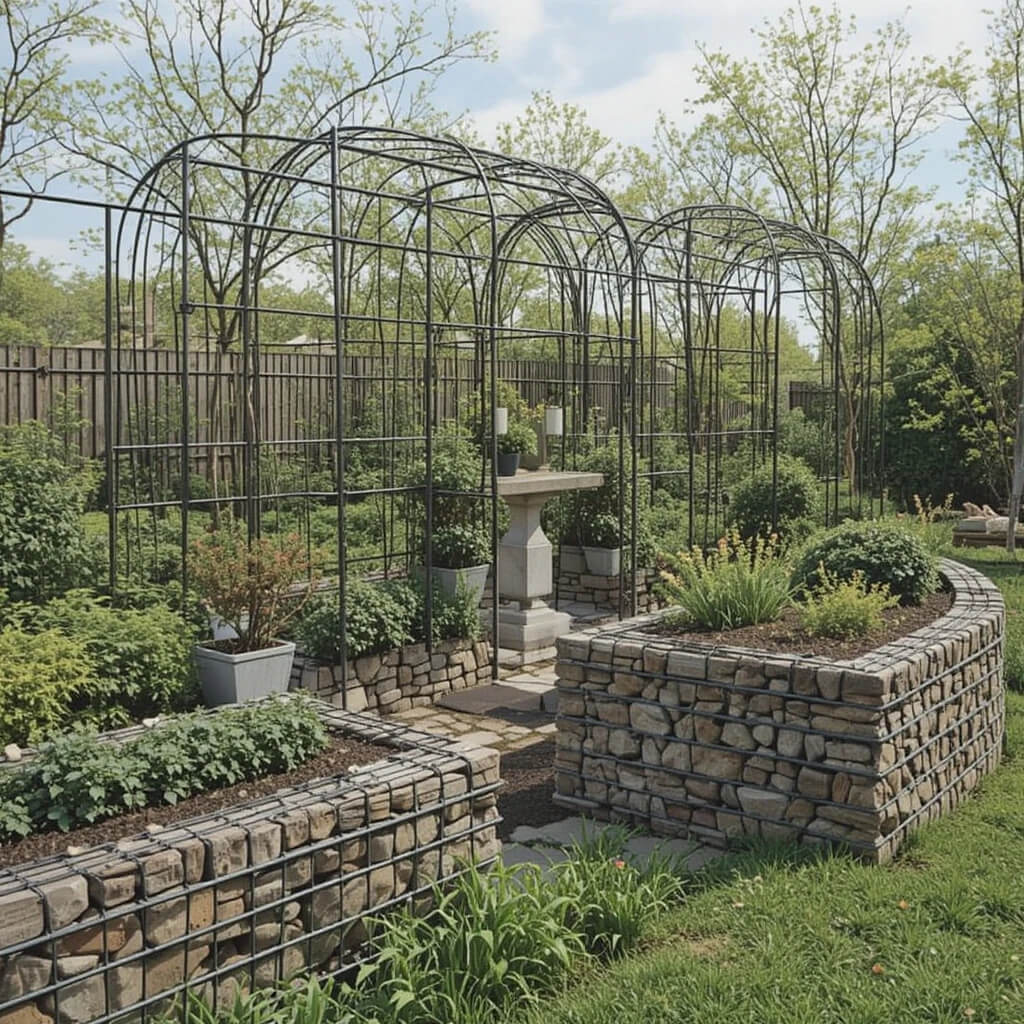
Introduce gabions—wire cages filled with stones—used as retaining walls but also as artistic garden features.
They can form vertical walls, seating, or planters, adding texture and a contemporary industrial edge while blending naturally with the garden environment.
5. Vertical Gardening to Maximize Space
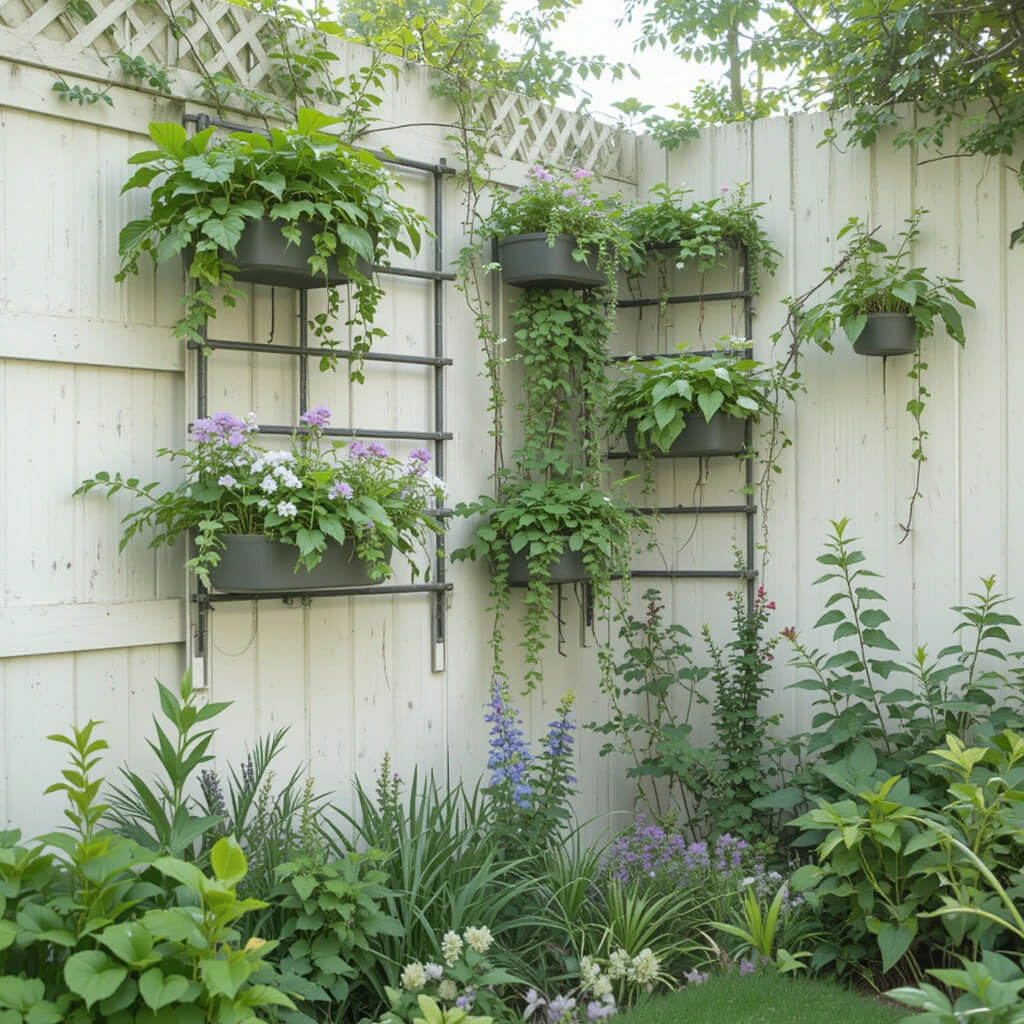
Convert plain walls or fences into verdant green statements with vertical gardening.
Use trellises, wall-mounted planters, or hanging baskets to add lushness.
This approach is perfect for small spaces and adds height and layers to your garden design.
6. Modern Garden Fencing with Artistic Flair
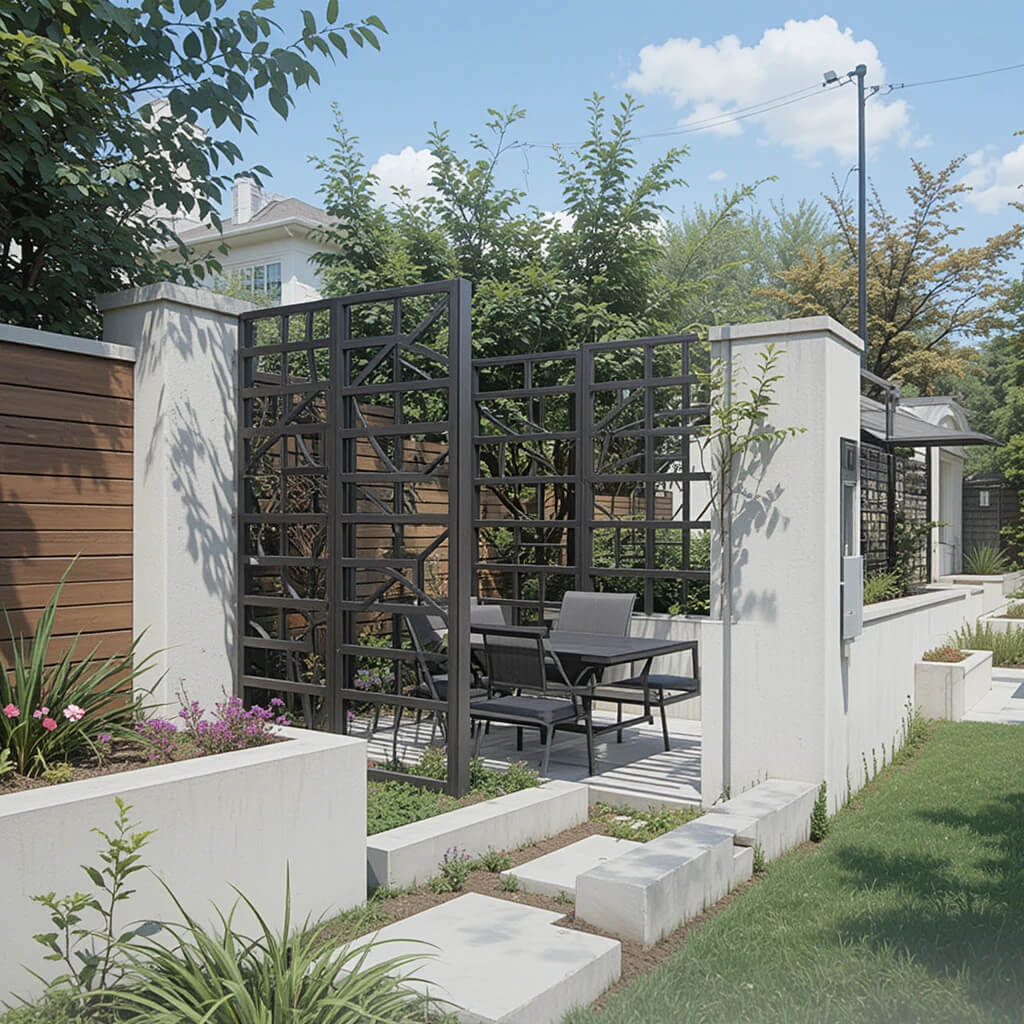
Replace traditional fencing with modern panels featuring cut-out designs.
Decorative fences add privacy while creating striking shadows and patterns that bring a dynamic element to open spaces.
Materials like steel or composite slats keep the look sleek and contemporary.
7. Zone Large Gardens for Functionality
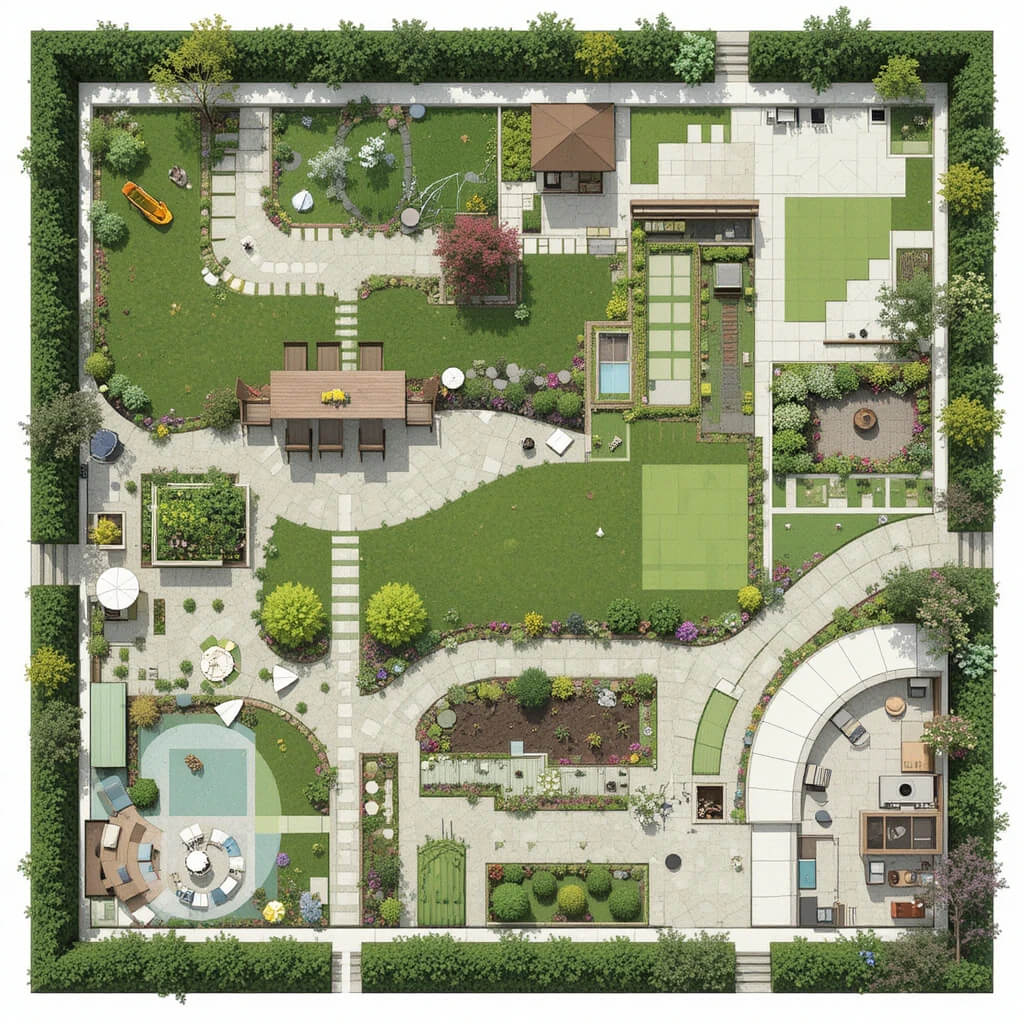
Divide large outdoor spaces into clearly defined zones such as entertaining areas, quiet retreats, vegetable patches, or play zones.
Use pathways, hedges, or elevation changes to create distinct areas that make a large garden feel functional and welcoming.
8. Clean Lines and Minimalist Hardscaping
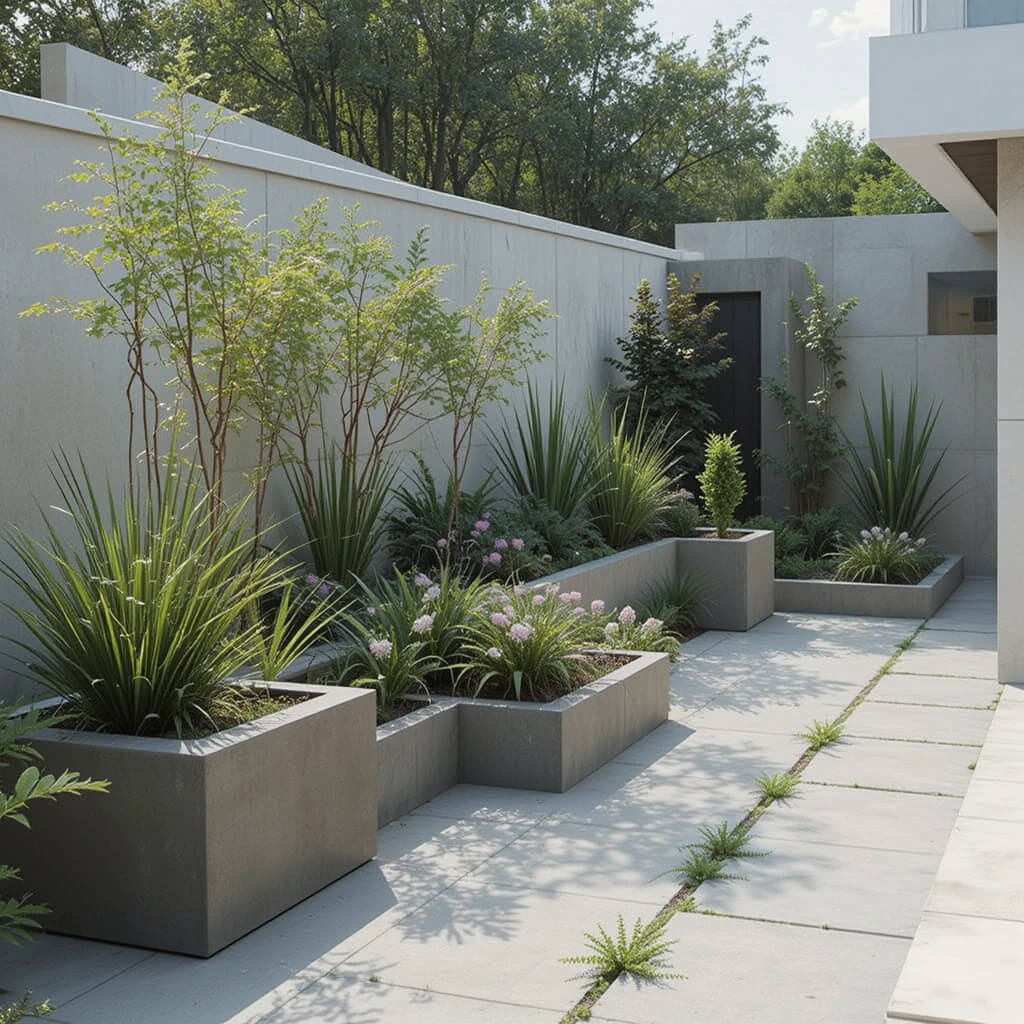
Modern gardens embrace simplicity with neat, straight edges and minimalist patios or terraces made from materials such as concrete, slate, or sandstone.
Avoid clutter choose simple paving and incorporate large planters with sculptural plants to maintain an uncluttered look.
9. Incorporate Native and Drought-Resistant Plants
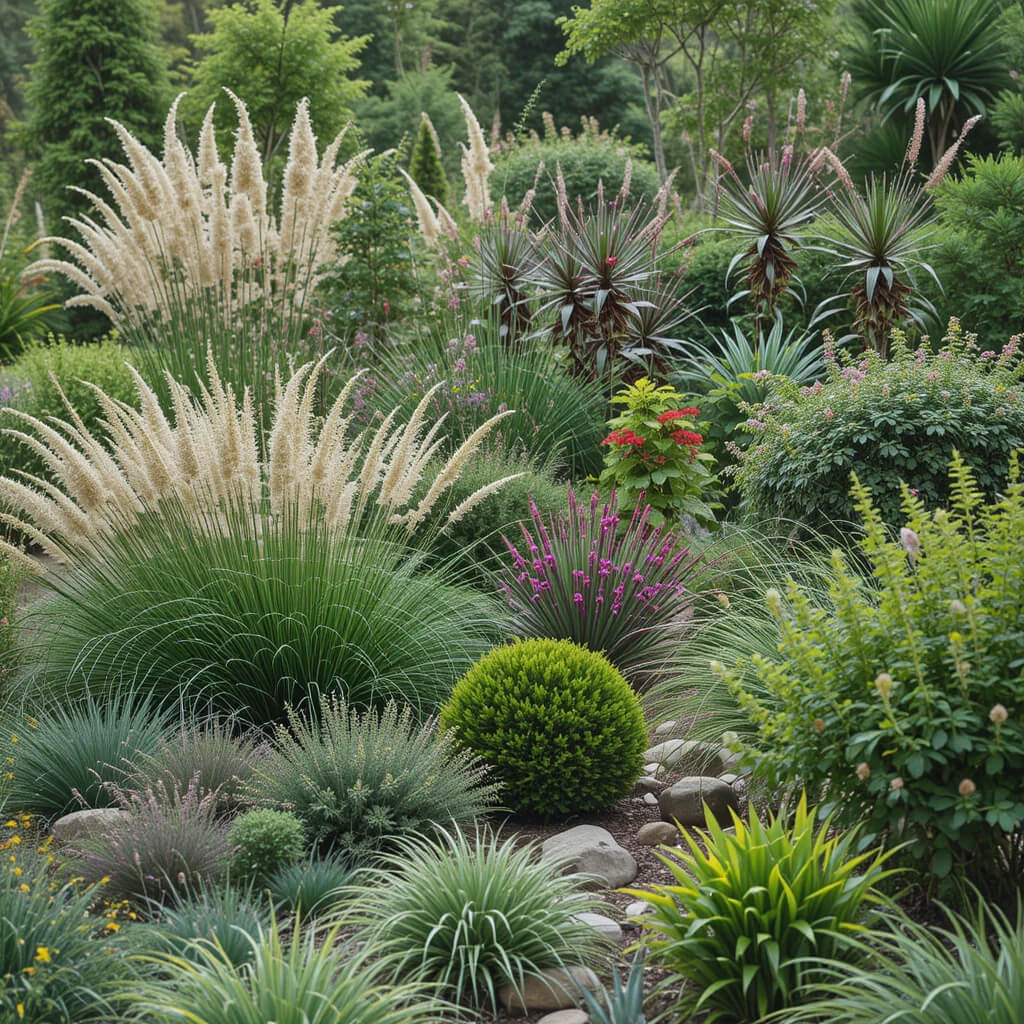
Select plants well-adapted to your local climate to reduce maintenance and water needs.
Native plants support local wildlife and create a sustainable garden. Mix ornamental grasses, low-growing shrubs, and bold architectural plants for texture and contrast.
10. Integrate Water Features with Geometric Shapes
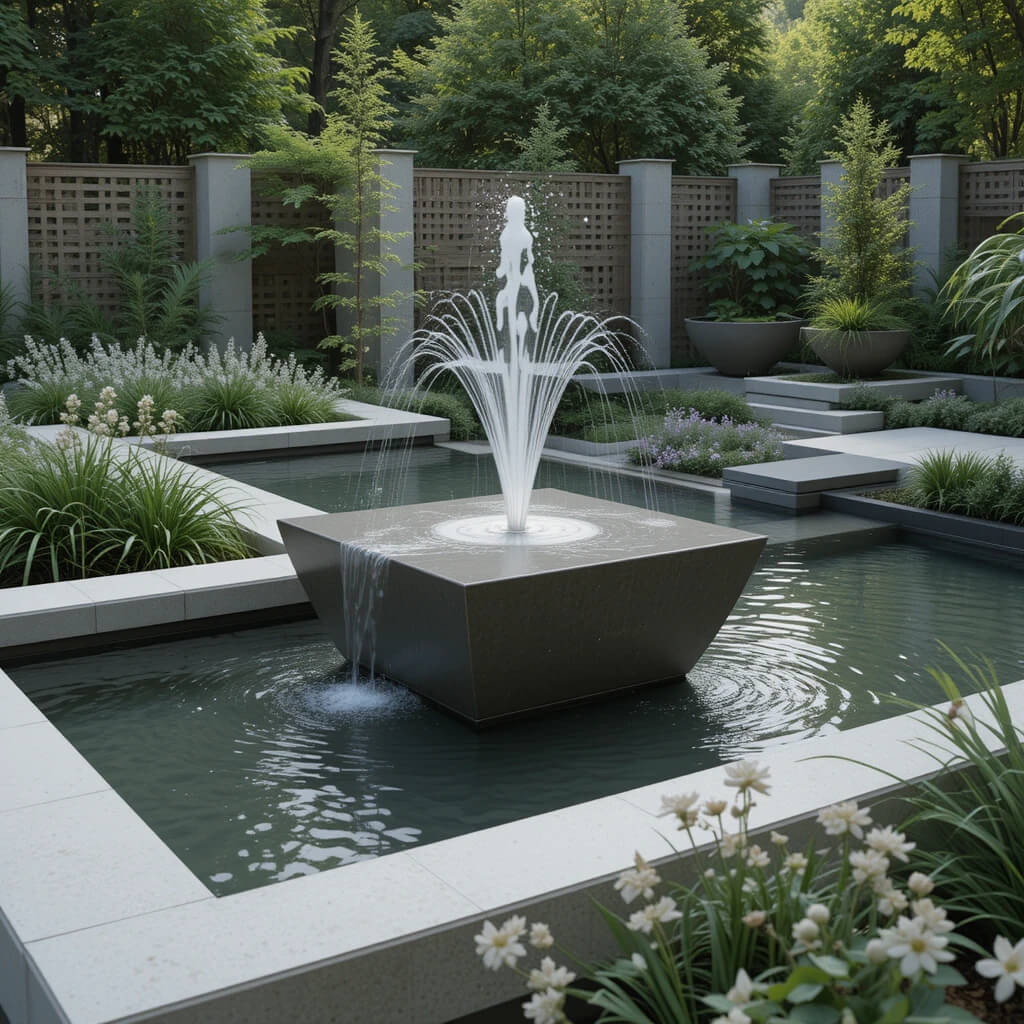
Add a tranquil touch with sleek water features such as reflecting pools, fountains, or ponds with clean, geometric lines.
Water adds movement, sound, and a cooling effect, enhancing the sensory experience of your garden.
11. Use Accent Walls or Bold Color Points
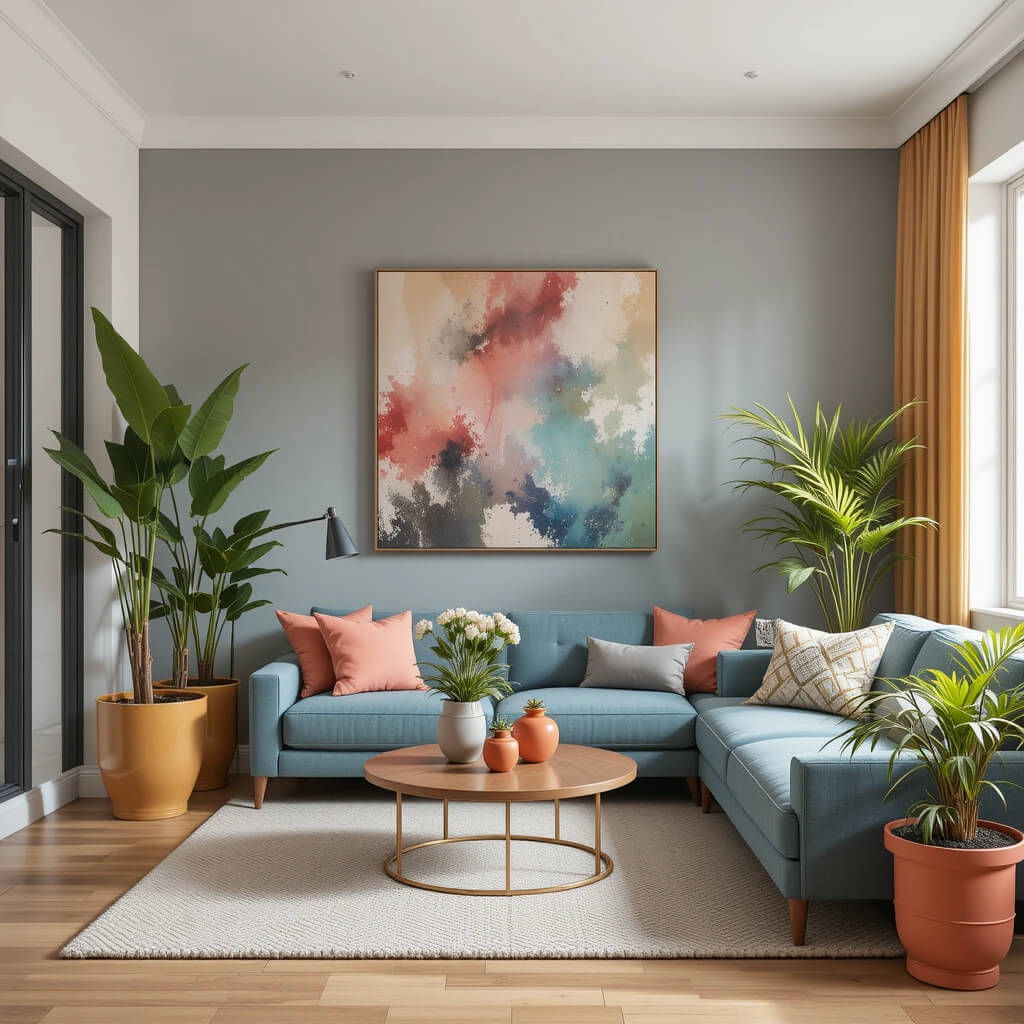
Bring warmth and personality with an accent wall or a splash of bold color in accessories like planters or furniture.
This adds vibrancy to the typically neutral modern palette and creates focal points that draw the eye.
12. Embrace Outdoor Lighting for Ambience
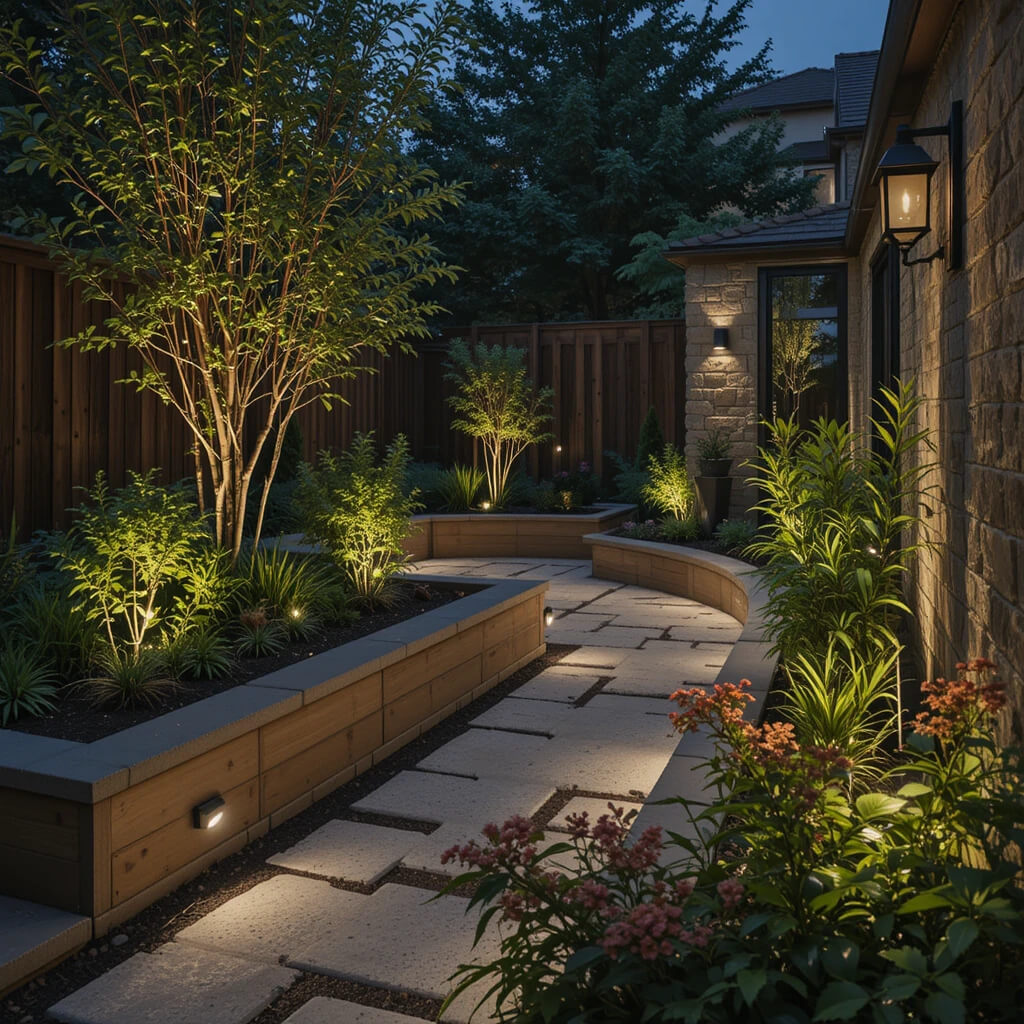
Install subtle outdoor lighting to highlight pathways, architectural elements, or plants.
LED strip lights under raised beds or wall-mounted fixtures can create a warm glow, making the garden enjoyable after dark and enhancing security.
Tips for Achieving a Modern Garden Design
- Less is More: Stick to a limited color palette and plant selection for a cohesive look. Repetition in plants and materials creates rhythm and calm.
- Choose Quality Materials: Invest in durable, sustainable materials with clean finishes like steel, concrete, natural stone, and timber.
- Plan for Maintenance: Design with easy-care plants and materials to keep upkeep minimal without sacrificing style.
- Include Seating Areas: Comfortable, modern furniture enhances usability, encouraging you to spend more time outdoors.
- Add Wildlife-Friendly Features: Integrate bee hotels, bird boxes, or butterfly-friendly plants to boost biodiversity.
Conclusion
Modern garden design offers a timeless, elegant outdoor space that balances simplicity with sophistication.
By incorporating clean lines, thoughtful layering, and functional zones, your garden can become a tranquil retreat that complements your lifestyle and home architecture.
Whether through raised beds, vertical gardens, or minimalist hardscaping, these 12 ideas provide a versatile toolkit to personalize and modernize any garden.
Frequently Asked Questions (FAQs)
Q1: What plants work best in a modern garden?
A1: Architectural plants with strong shapes like succulents, ornamental grasses, boxwoods, and bamboo work well. Incorporate native and drought-tolerant species for sustainability.
Q2: How do I make a small garden look bigger?
A2: Use sectional zoning, vertical planting, light colors, and reflective water features to create a sense of space. Clean lines and minimalist design also help reduce visual clutter.
Q3: Are modern gardens high maintenance?
A3: Not necessarily. Modern designs often emphasize easy-care plants and materials. Proper planning can create a stylish yet low-maintenance garden.
Q4: Can a modern garden include wildlife-friendly features?
A4: Absolutely. Incorporate native plants, bee hotels, bird boxes, and water sources to attract beneficial wildlife while maintaining a modern aesthetic.
Q5: What materials are ideal for modern garden paths?
A5: Concrete, large pavers, gravel, and natural stone are popular choices. Paths with clean edges and organic curves add both function and style.