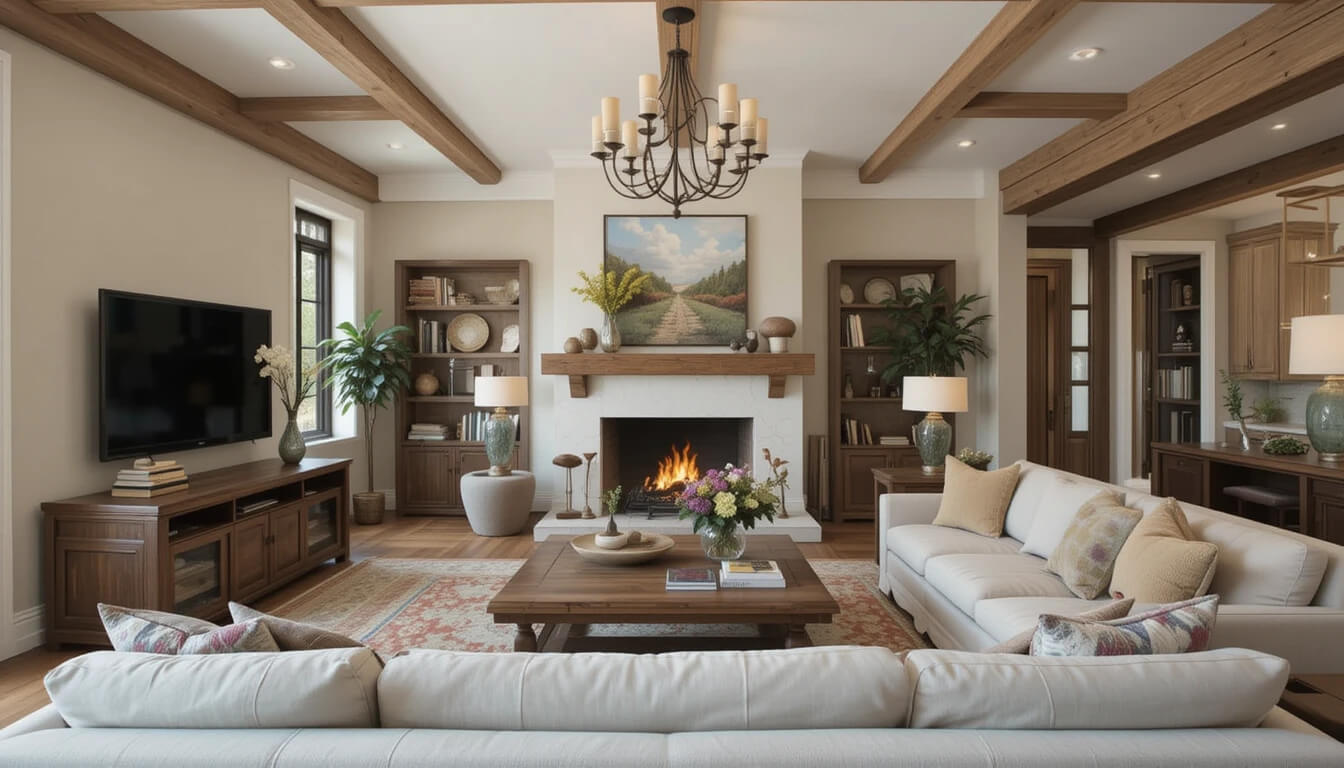
Rustic living room design evokes warmth, comfort, and a timeless connection to nature through the use of natural materials, textures, and authentic vintage elements.
Whether creating a cozy cabin vibe or a sophisticated rural retreat, rustic interiors offer versatility and charm.
Here are 12 inspired ideas to help transform a living room into a rustic haven
1. Embrace Natural Wood and Exposed Beams
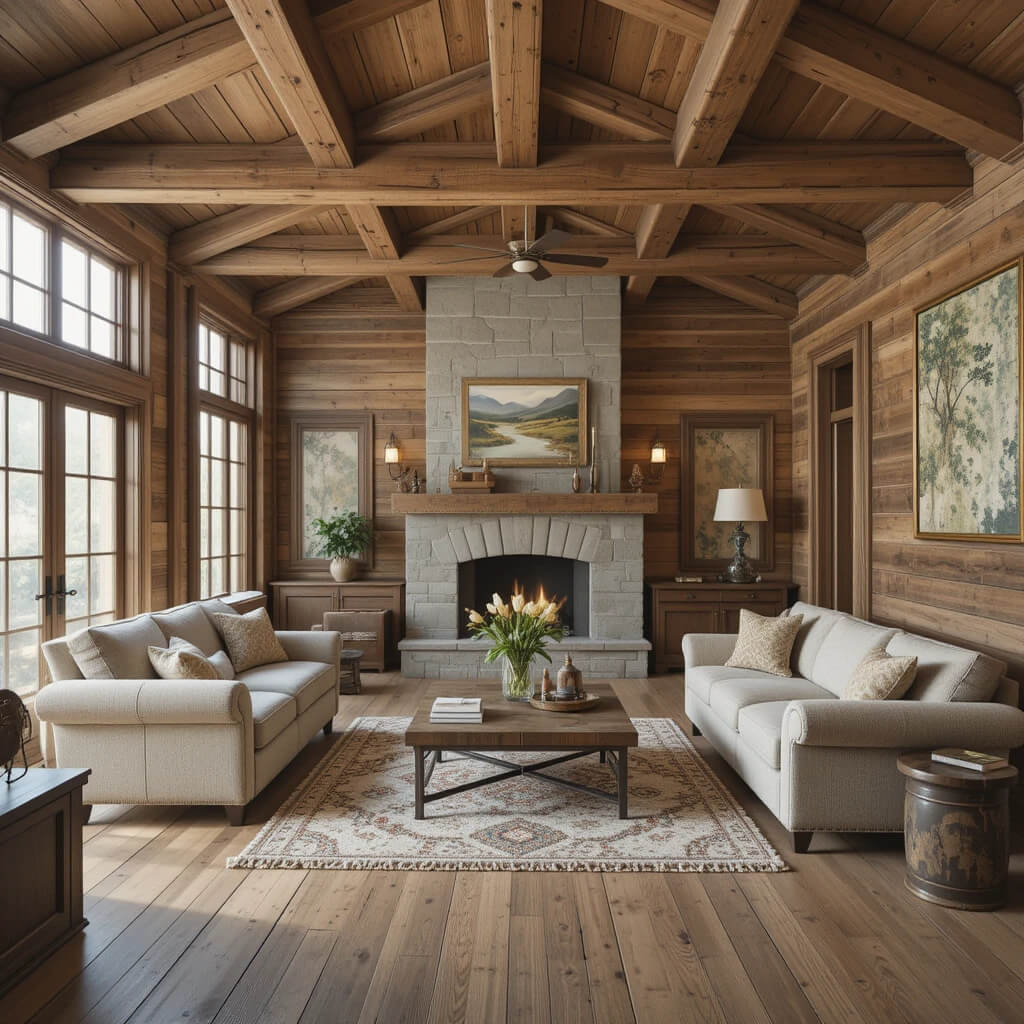
One hallmark of rustic design is the use of natural wood elements.
Exposed wooden ceiling beams, wide plank floors, and reclaimed wood paneling on walls or ceilings add texture and history.
These elements create a strong visual warmth and grounding effect that is essential in rustic decor.
Using wood that shows grain, knots, and imperfections emphasizes authenticity and craftsmanship.
2. Layer Rich, Textural Fabrics
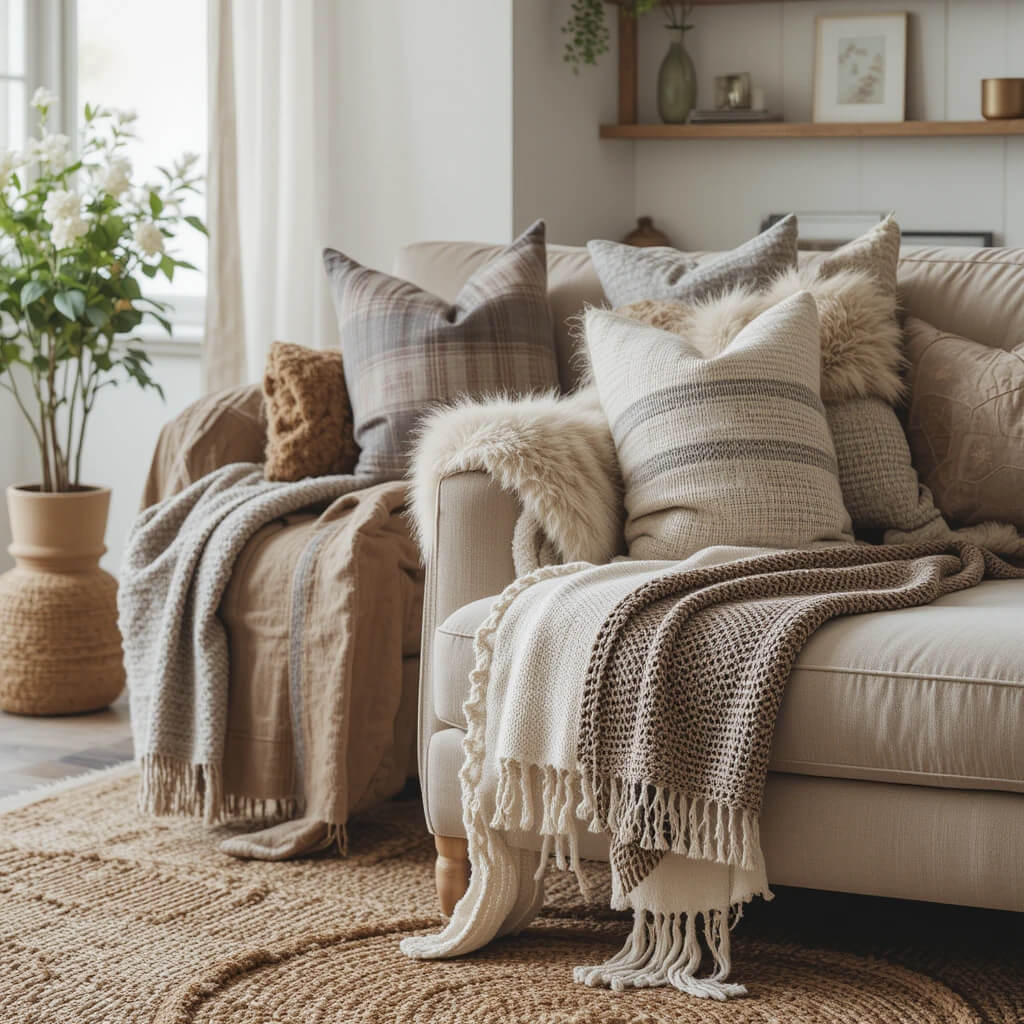
Texture is key in rustic spaces. Layering furniture fabrics such as linen, wool, hemp, or leather upholstery provides tactile and visual interest.
Throw pillows and blankets in natural fibers and patterns, such as plaids or earthy tones, enhance the cozy feel.
Rugs made from jute or vintage Moroccan styles can add softness and a global rustic flair.
3. Add Stone Features
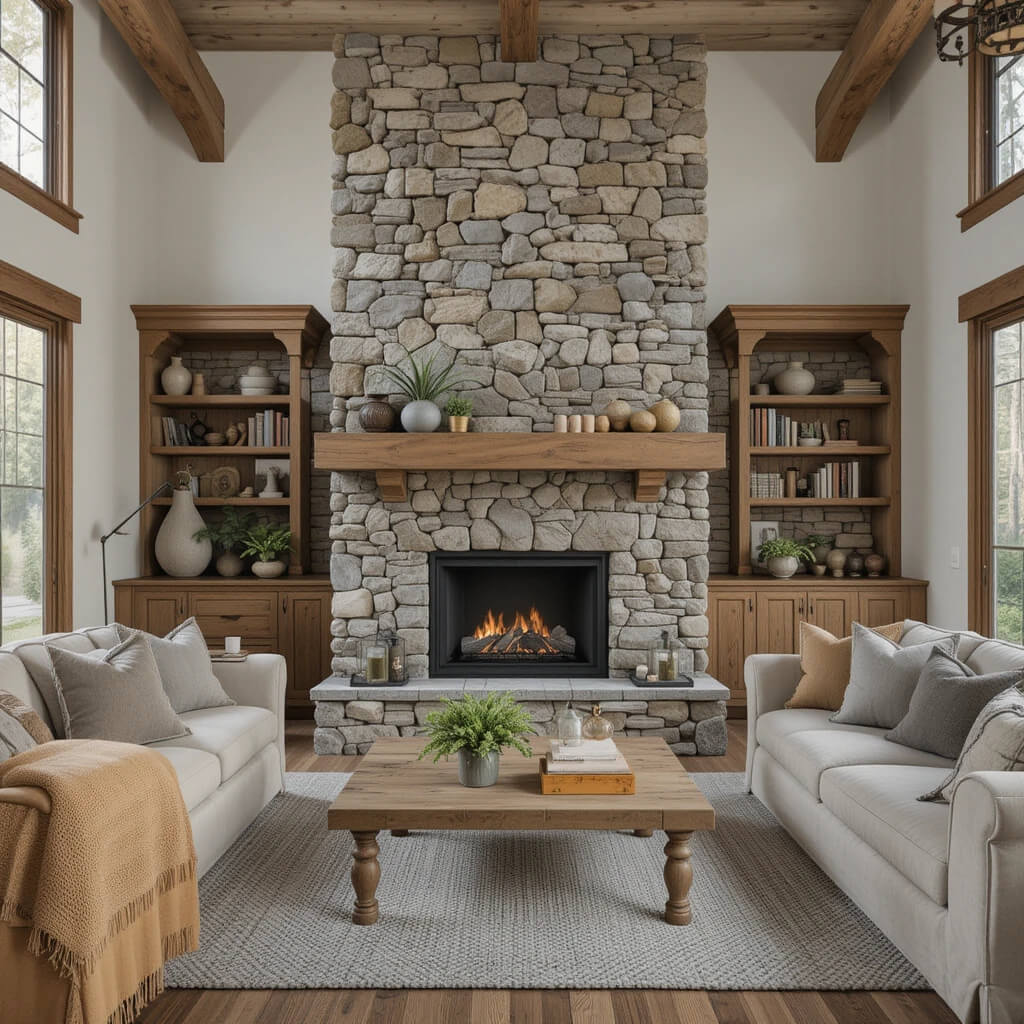
Stone accents like a natural stone fireplace surround or an accent wall bring rustic ruggedness into the living room.
Rough-cut stone or mossy rocks create a connection to the earth and give the room a sense of permanence and stability.
Pair stone elements with warm wood to balance hardness with softness.
4. Mix Modern and Rustic Furniture
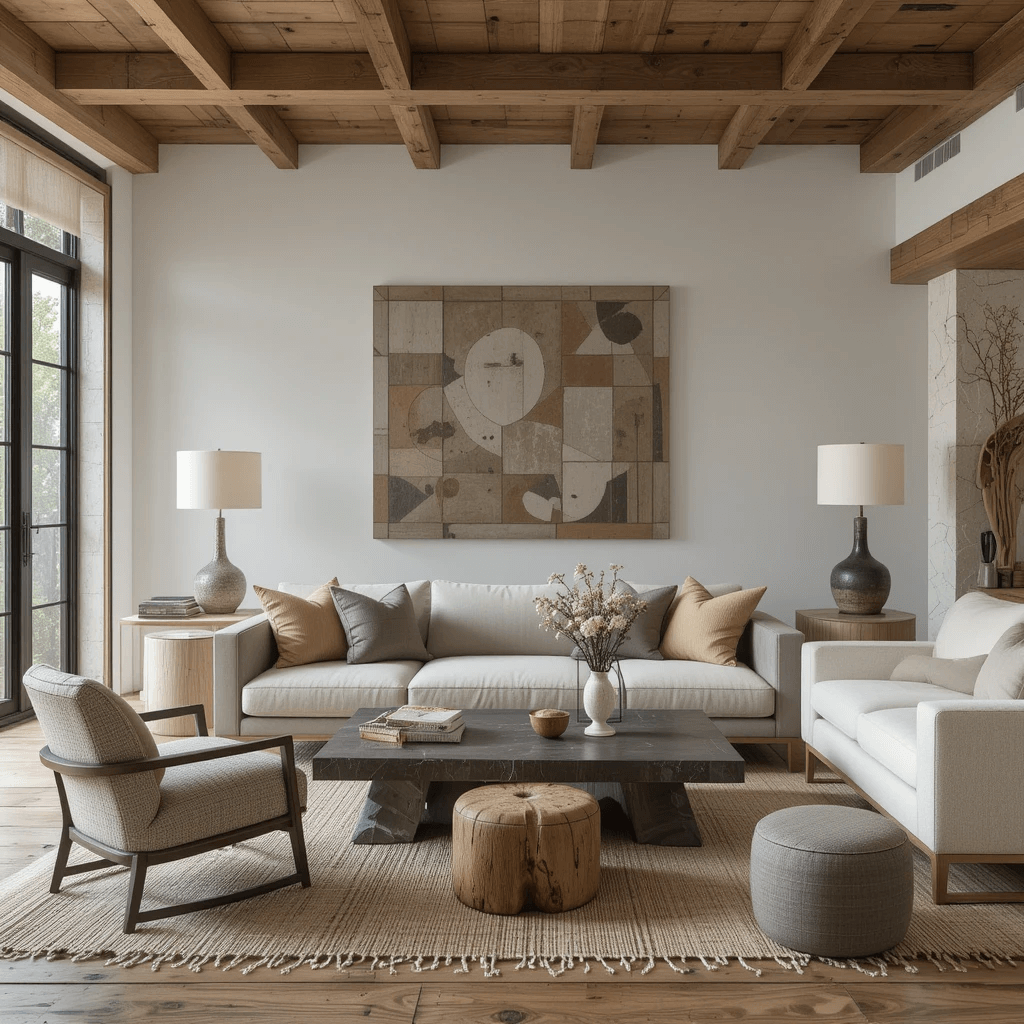
Modern rustic designs blend rustic raw materials with sleek, contemporary furniture silhouettes.
This approach avoids the space feeling too heavy or old-fashioned by introducing minimalist sofas or clean-lined tables alongside authentic rustic wood pieces.
Combining contemporary linens with aged wood or vintage finds encourages a sophisticated yet approachable aesthetic.
5. Use Warm, Earthy Color Palettes
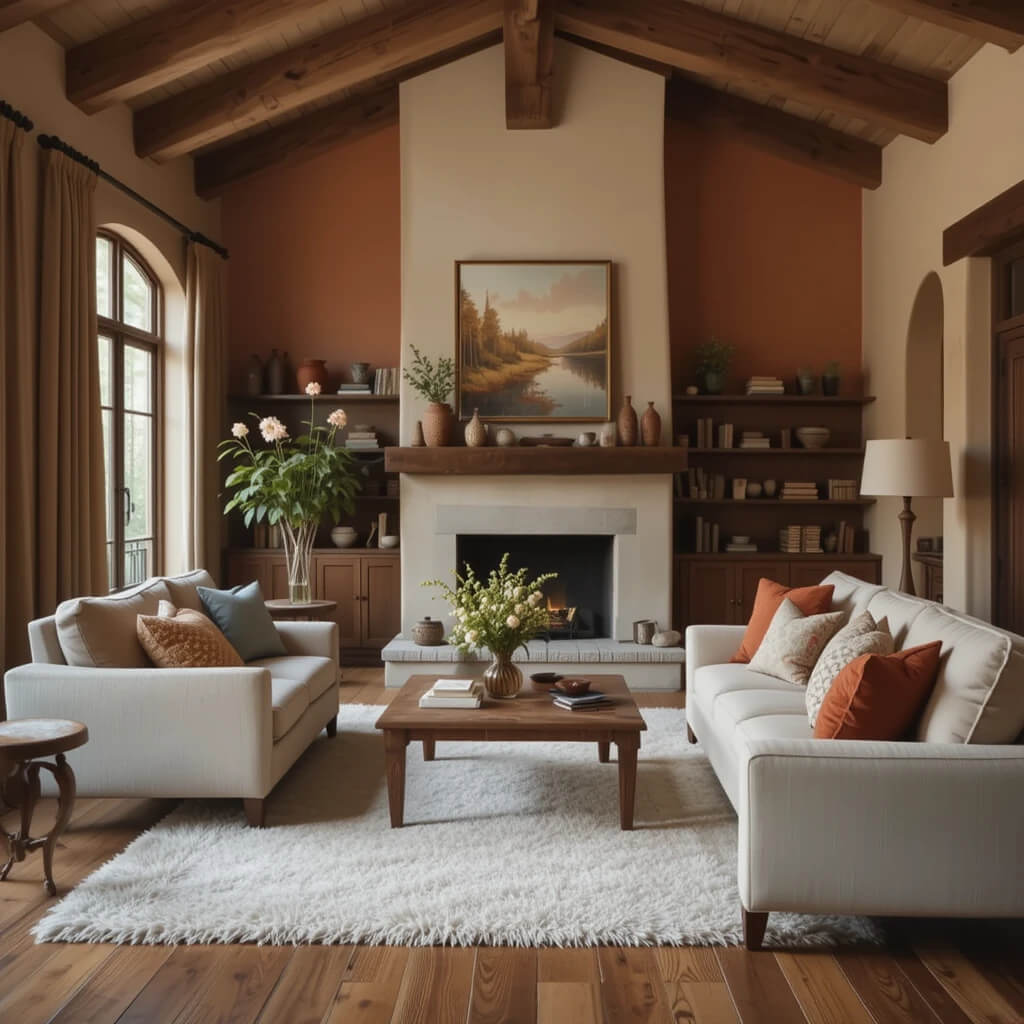
Rustic living rooms benefit from subdued, earthy tones such as oatmeal, terracotta, ochre, umber, and warm wood browns.
These colors evoke nature and create a calming environment.
Accents in vegetable dye-inspired blues or reds provide pops of color without overpowering the natural serenity.
6. Incorporate Vintage and Handcrafted Decor
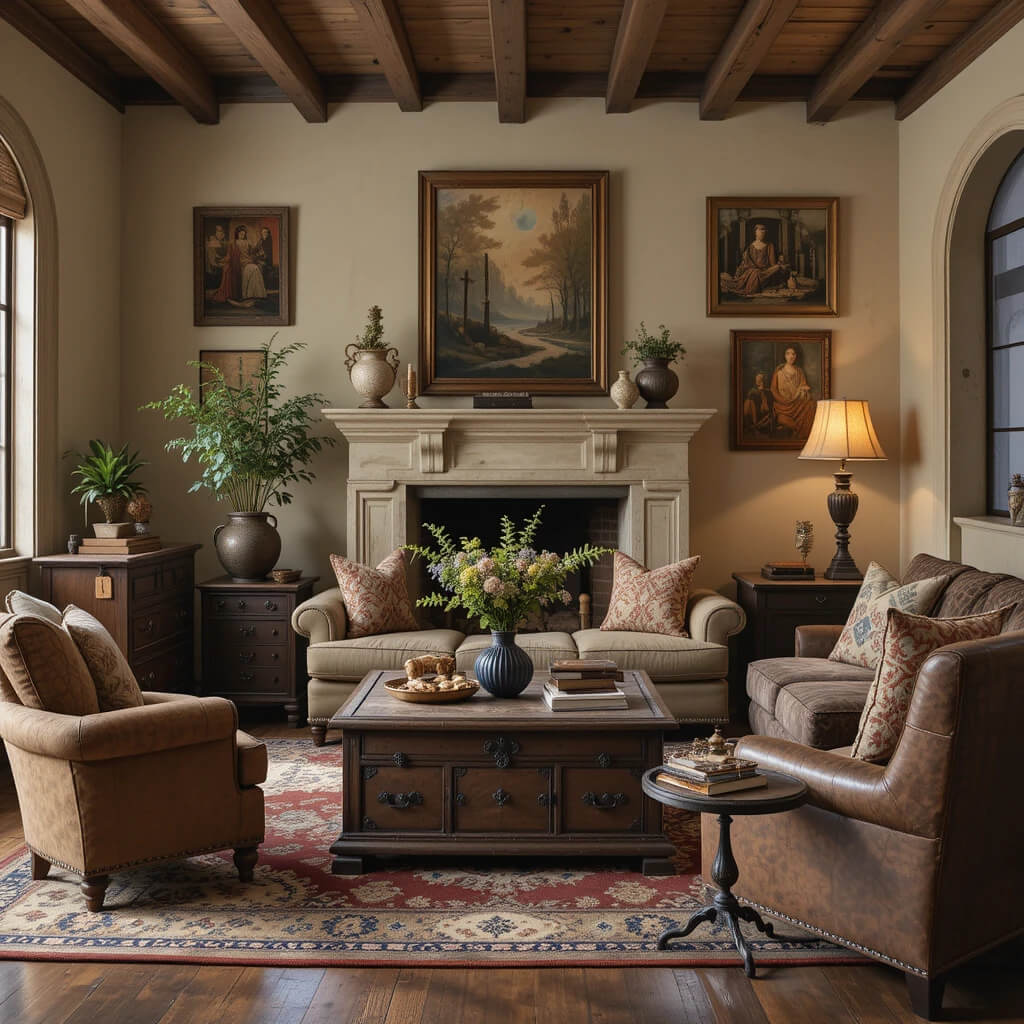
Authenticity is important.
Choose furniture and decorative objects that bear signs of age, craftsmanship, or use, such as hand-carved wooden chests, antique iron hardware, or vintage textiles.
These pieces tell a story and add personality to a rustic living room, distinguishing it from mass-produced spaces.
7. Showcase a Cozy Fireplace
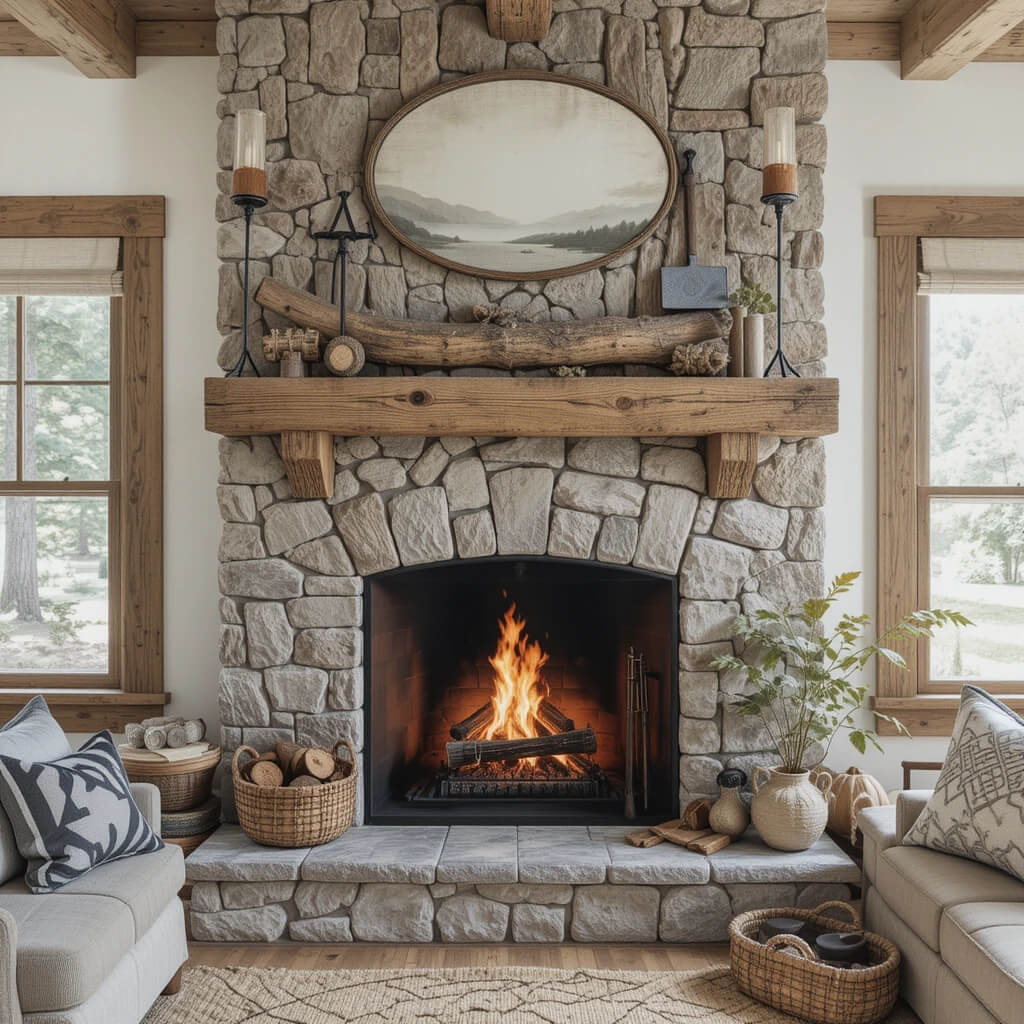
A fireplace acts as a focal point and gathering spot in rustic living rooms.
Whether traditional wood-burning or modern, ensure the mantel and hearth use natural materials like wood or stone.
Accessorize with iron tools or woven logs baskets to enhance rustic charm.
8. Display Natural Elements and Greenery
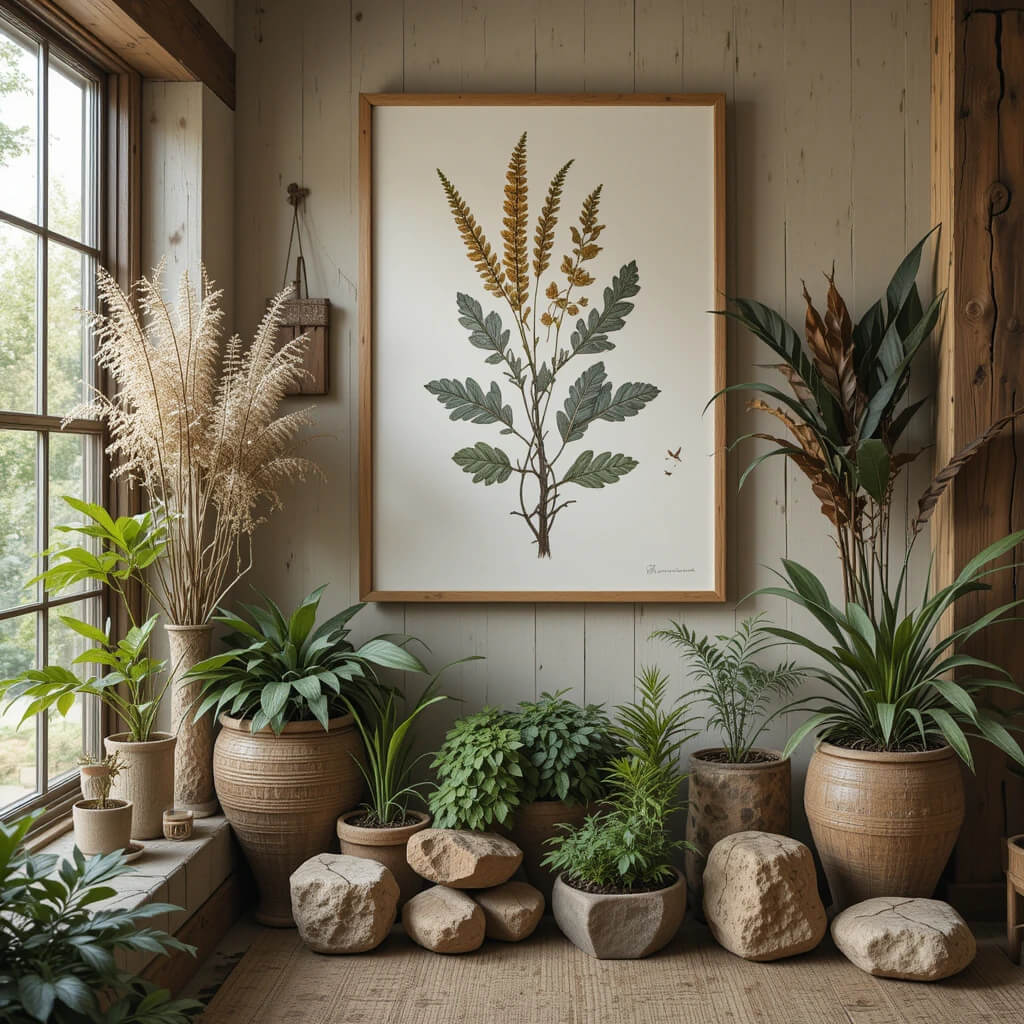
Bringing nature indoors strengthens the rustic sensibility.
Potted plants, dried flowers, or floral arrangements can soften the roughness of wood and stone.
Incorporating natural art, such as botanical prints or landscape paintings, enhances the connection to the outdoors.
9. Explore Rustic Lighting Fixtures
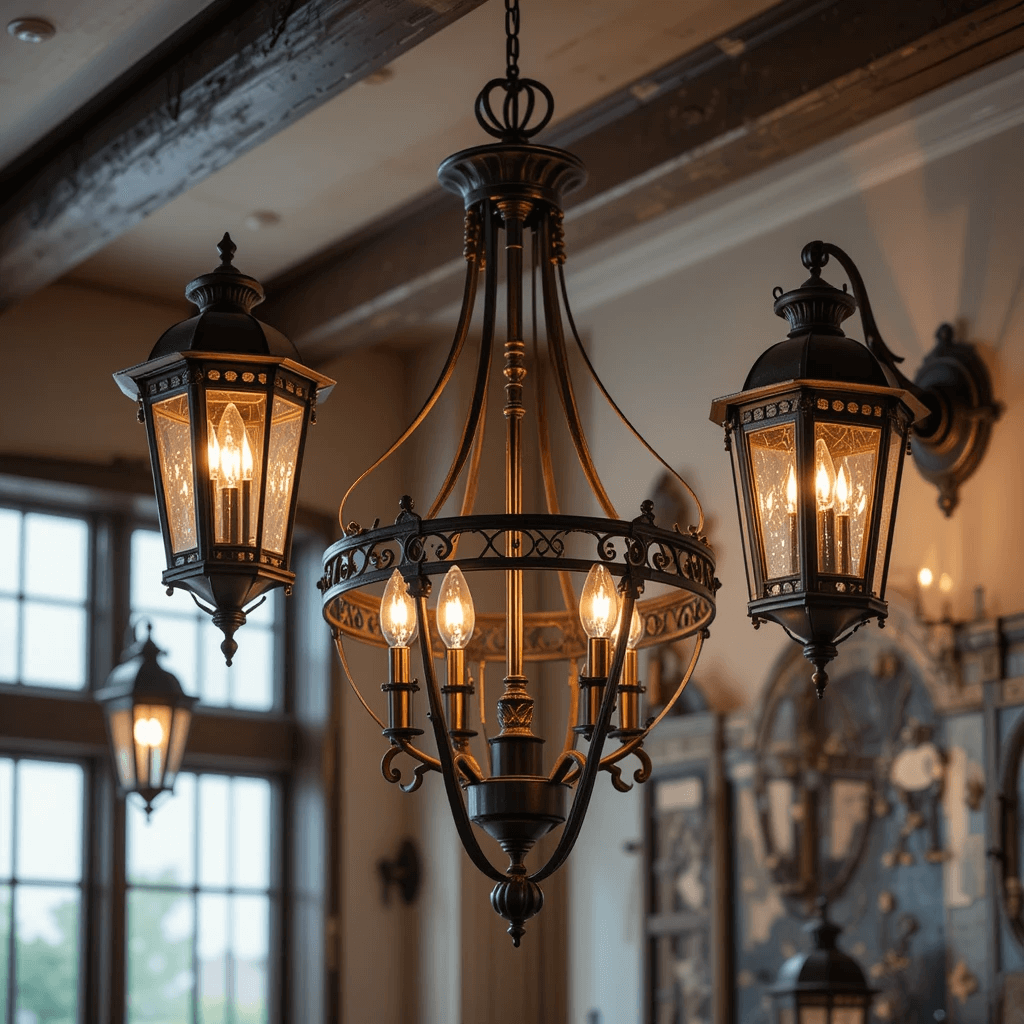
Rustic lighting often features wrought iron, bronze, or copper finishes.
Chandeliers with a medieval or aged look, lantern-style sconces, or vintage lamps add ambiance and style.
Warm, glowing lights foster a welcoming atmosphere perfect for relaxing or entertaining.
10. Use Open Shelving and Practical Storage
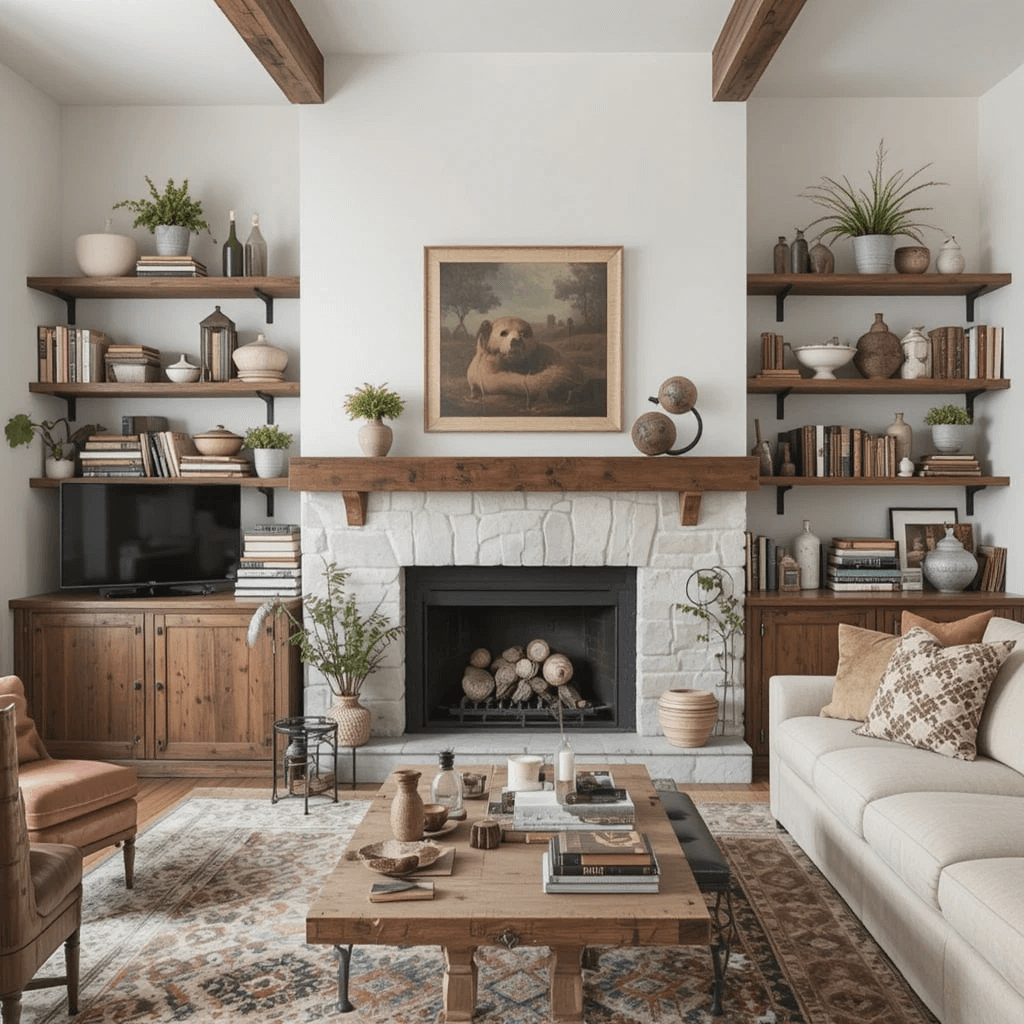
Rustic living rooms benefit from open shelves made of reclaimed wood or iron brackets to display books, pottery, or collected curios.
This exposes personal collections to view, reinforcing the lived-in, authentic feel of the space while keeping it functional.
11. Add Layered Rugs for Warmth
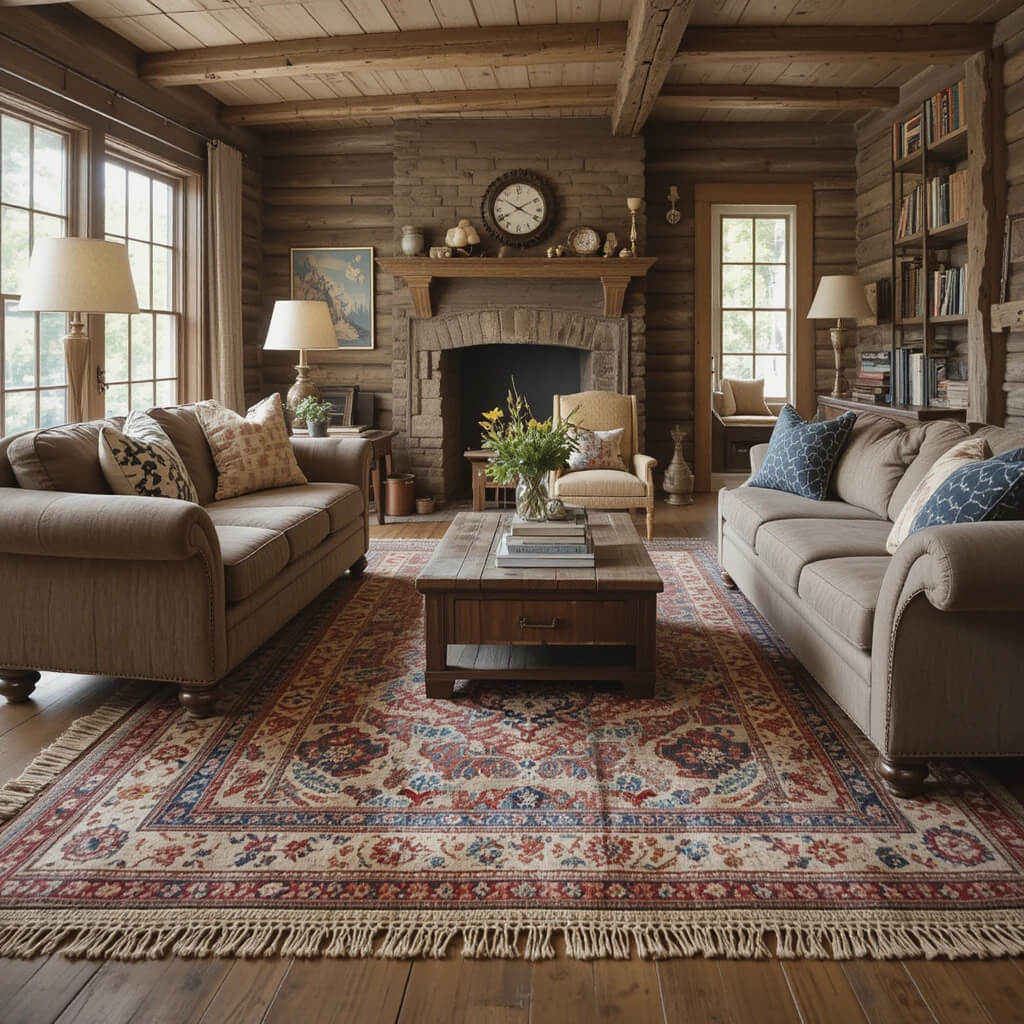
Layered rugs, such as a vintage patterned rug over natural fiber mats, add insulation and softness underfoot.
This layering also brings depth and visual interest, helping to anchor seating areas in rustic living rooms with wooden floors.
12. Balance Symmetry with Organic Imperfections
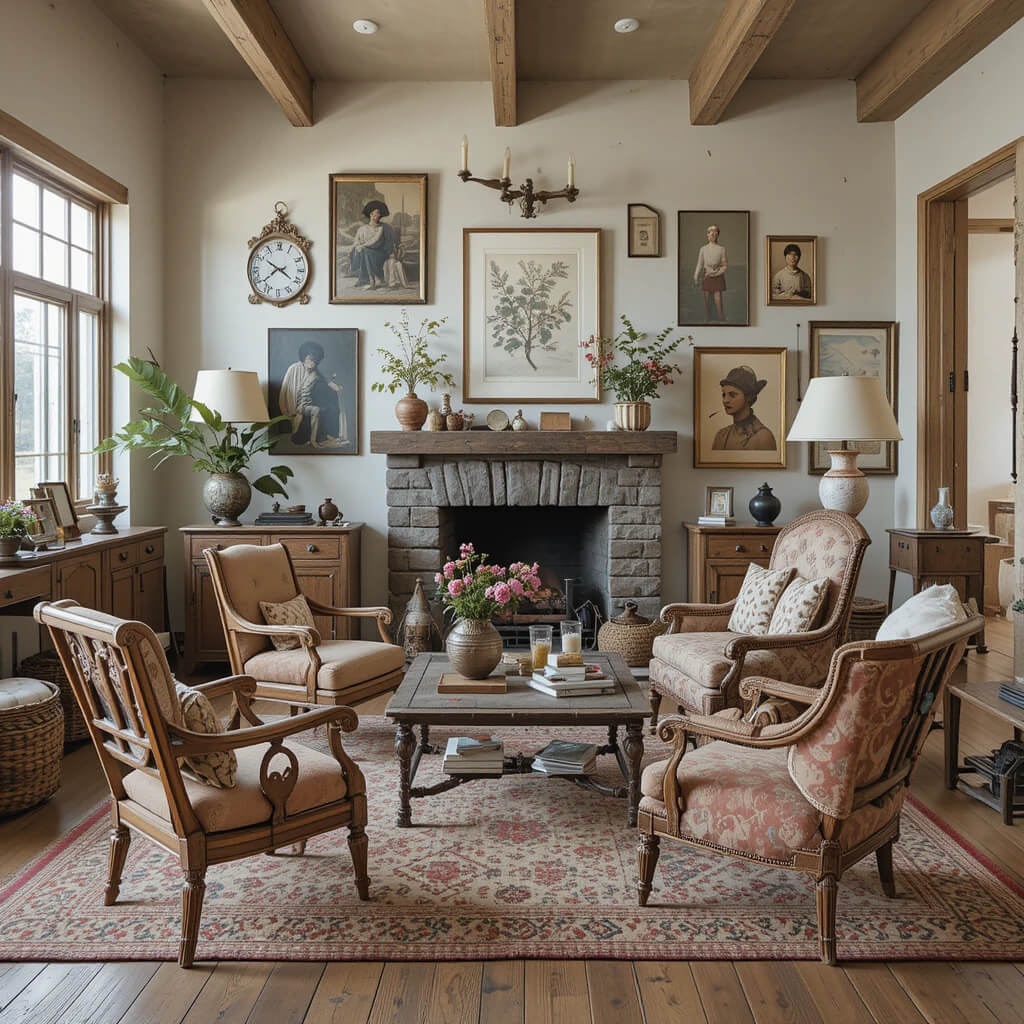
Rustic design often eschews perfect symmetry in favor of arrangements that feel natural and relaxed.
Mixing oddities, such as mismatched chairs or an asymmetrical gallery wall, adds to the charm and personality of rustic interiors, reflecting a casual, collected-over-time style.
Rustic Living Room Design Tips
- Prioritize authentic materials: Select solid wood, natural stone, iron, and quality textiles over imitation or synthetic products.
- Embrace imperfections: Character marks like knots, scratches, and patina add warmth and interest.
- Mix old and new: Balance raw rustic elements with contemporary convenience for a functional modern lifestyle.
- Let natural light flow: Large windows create a connection with the outdoors and enhance the natural textures inside.
- Add personal touches: Antique family heirlooms, travel souvenirs, or hand-crafted decor bring the design to life.
Conclusion
Rustic living room design offers a beautiful blend of comfort, history, and nature.
By focusing on natural materials, layering textures, embracing imperfection, and balancing modern with traditional elements, it’s possible to create a space that feels authentic and welcoming.
These 12 rustic living room ideas provide versatile approaches to suit a variety of tastes—from cozy cabins to refined countryside homes—ensuring a warm and stylish space for family and friends.
Frequently Asked Questions
Q1: How can I make a small living room look rustic?
Use lighter wood finishes, incorporate layered rugs, choose compact rustic furniture, and add plenty of natural light to keep it airy yet cozy.
Q2: What colors work best in rustic living rooms?
Warm earth tones like terracotta, ochre, and natural wood shades are best, complemented by soft neutrals and muted blues or greens derived from natural dyes.
Q3: Can rustic design work with modern decor?
Yes, blending rustic materials with modern furniture and clean lines creates a stylish modern rustic aesthetic that feels both timeless and fresh.
Q4: What are key rustic living room furniture materials?
Solid wood (oak, pine, chestnut), wrought iron, leather, linen, wool, and stone are ideal materials that reflect rustic authenticity.
Q5: How to add personal charm to rustic living rooms?
Incorporate vintage or handcrafted decor, family heirlooms, travel items, and open shelves that display meaningful objects to create a lived-in, unique vibe.